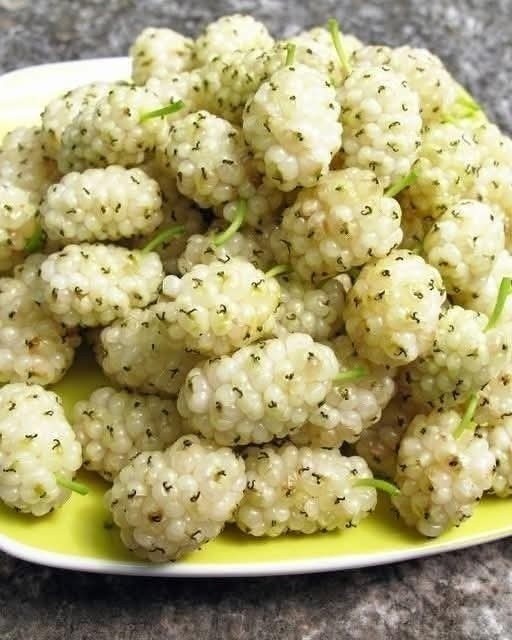
The white mulberry, originally from the Far East, once used primarily for sericulture, is finally getting its revenge: almost forgotten, today it is once again valued not only for its characteristic, sweet and pleasantly sour taste, but also and above all for its countless beneficial properties. Let’s take a look together at what they are and how you can use them in the kitchen (and beyond).
The white mulberry, widespread in remote centuries in China and Korea, belongs to the Moraceae family and the Morus genus. According to ancient tradition, once used in the breeding of silkworms (mulberry), it has been rediscovered today for its countless advantages and beneficial properties. It is possible to use not only the fruits of this plant – to enjoy them naturally or to make excellent preserves, granitas and juices – but also the leaves, which, after drying, are used to prepare infusions and decoctions.
The white mulberry, introduced to the Mediterranean probably in the 12th century, found an ideal habitat in Italy and southern Europe.
