ADVERTISEMENT
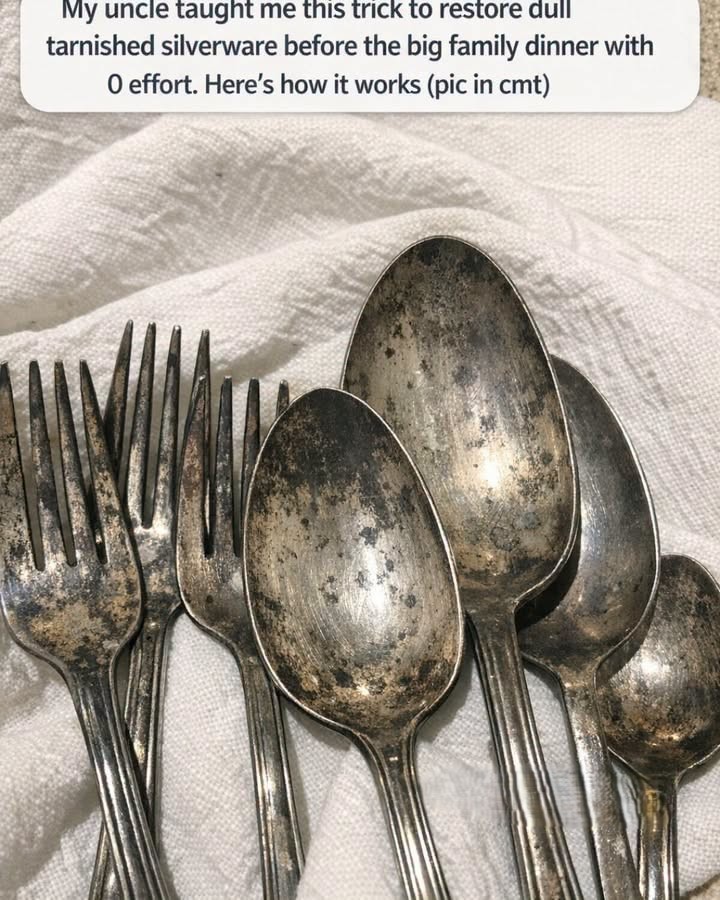
My uncle taught me this trick to restore dull tarnished silverware before the big family dinner with 0 effort. Here’s how it works
11. How I handle knives, serving pieces, and oddly shaped utensils
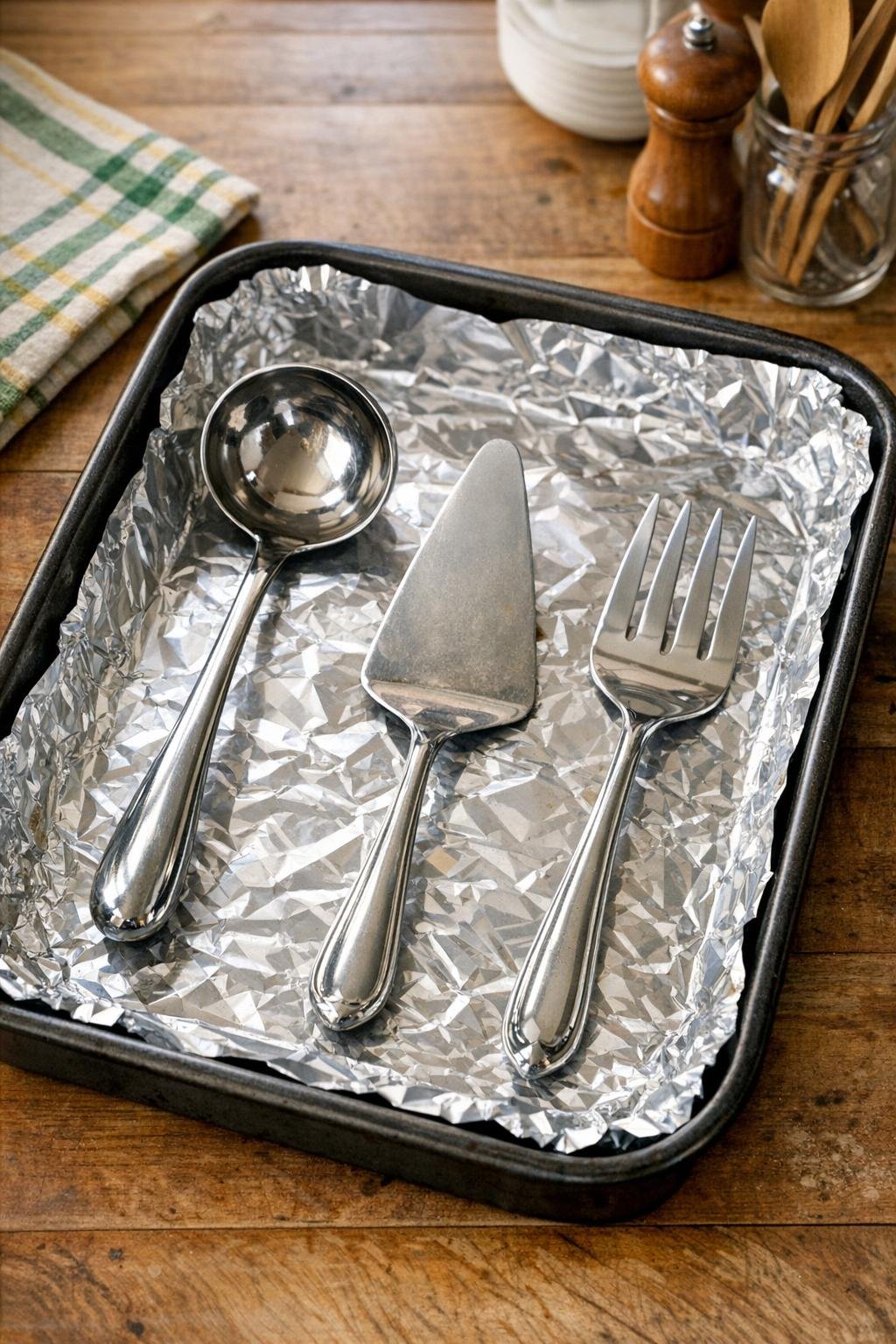
Flat forks and spoons are easy, but serving forks, pie servers, butter knives, and ladles sometimes need a little repositioning. I turn them once halfway through if part of the surface isn’t contacting the foil well. For long pieces, I use a roasting pan or even line one side of a clean sink basin with foil so the whole item can lie flat.
For silver knives with hollow or weighted handles, I keep the soak shorter, around 3 to 5 minutes, and I dry them extra thoroughly, especially around the seam where the blade meets the handle. That small habit helps prevent moisture from lingering where it shouldn’t.
12. A realistic before-and-after expectation
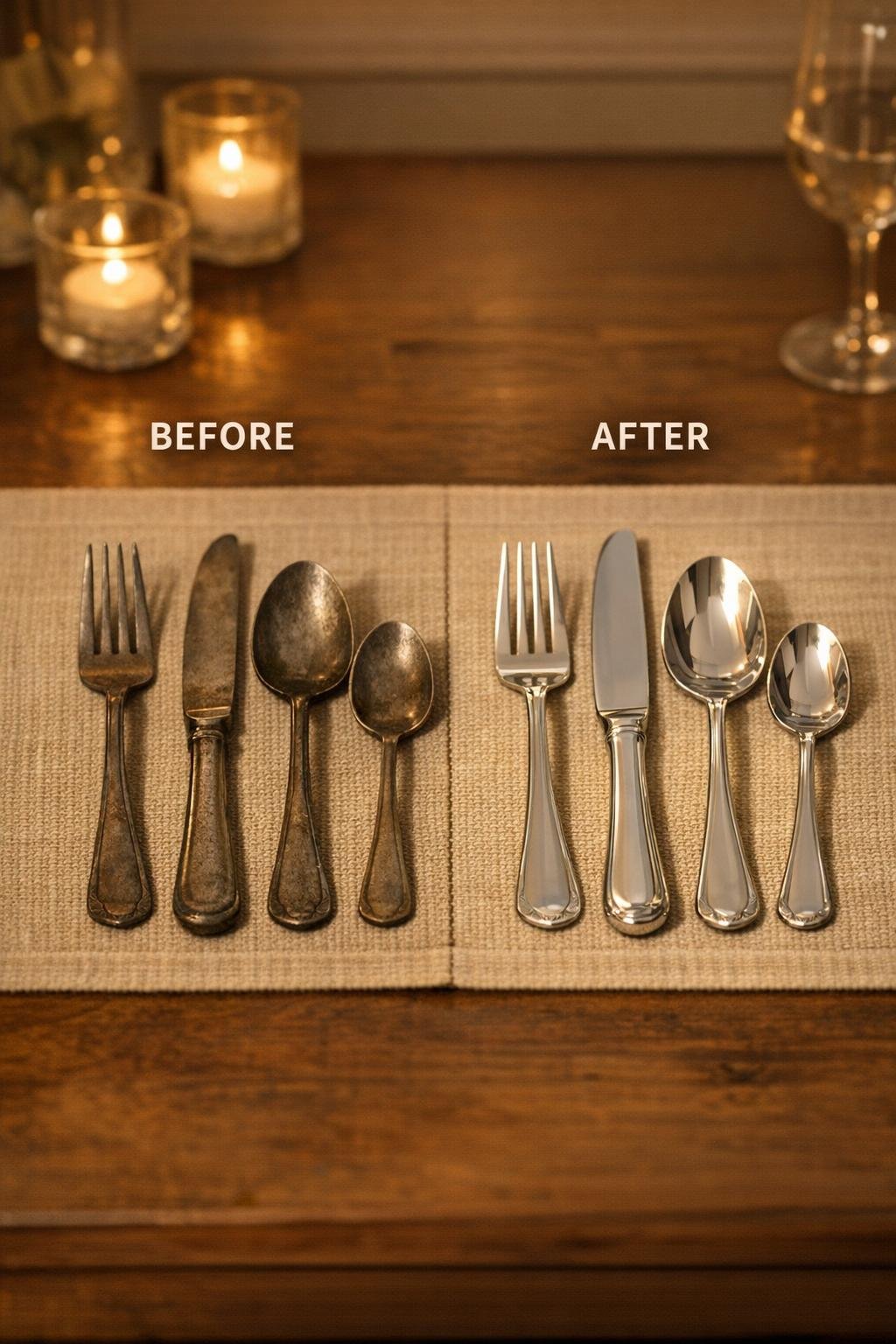
This trick can make silverware go from dingy to dinner-ready fast, but “restored” doesn’t always mean “museum-perfect.” If your flatware has 20 years of wear, tiny scratches, and thin plating on the edges, it may still show its age after the tarnish is gone. That’s normal.
What you should expect is brighter shine, cleaner color, and a fresher overall look. At my table, that’s plenty. Once the candles are lit and the food is out, nobody is inspecting the back of a salad fork under a spotlight. They just notice that the table feels cared for.
13. How to keep silverware from tarnishing again so quickly
After cleaning, store silverware completely dry. Moisture speeds up problems. I like to wrap special pieces in soft cotton or keep them in anti-tarnish storage cloth if I know I won’t use them for a few months. Some people use anti-tarnish strips in storage boxes, and those can help too.
Try not to store silver in rubber bands, newspaper, or damp felt unless the lining is specifically anti-tarnish. Sulfur-containing materials can encourage discoloration. In my house, even a simple zip-top storage bag with as much air pressed out as possible works better than tossing nice serving pieces loosely into a drawer.
14. When I still choose traditional silver polish instead
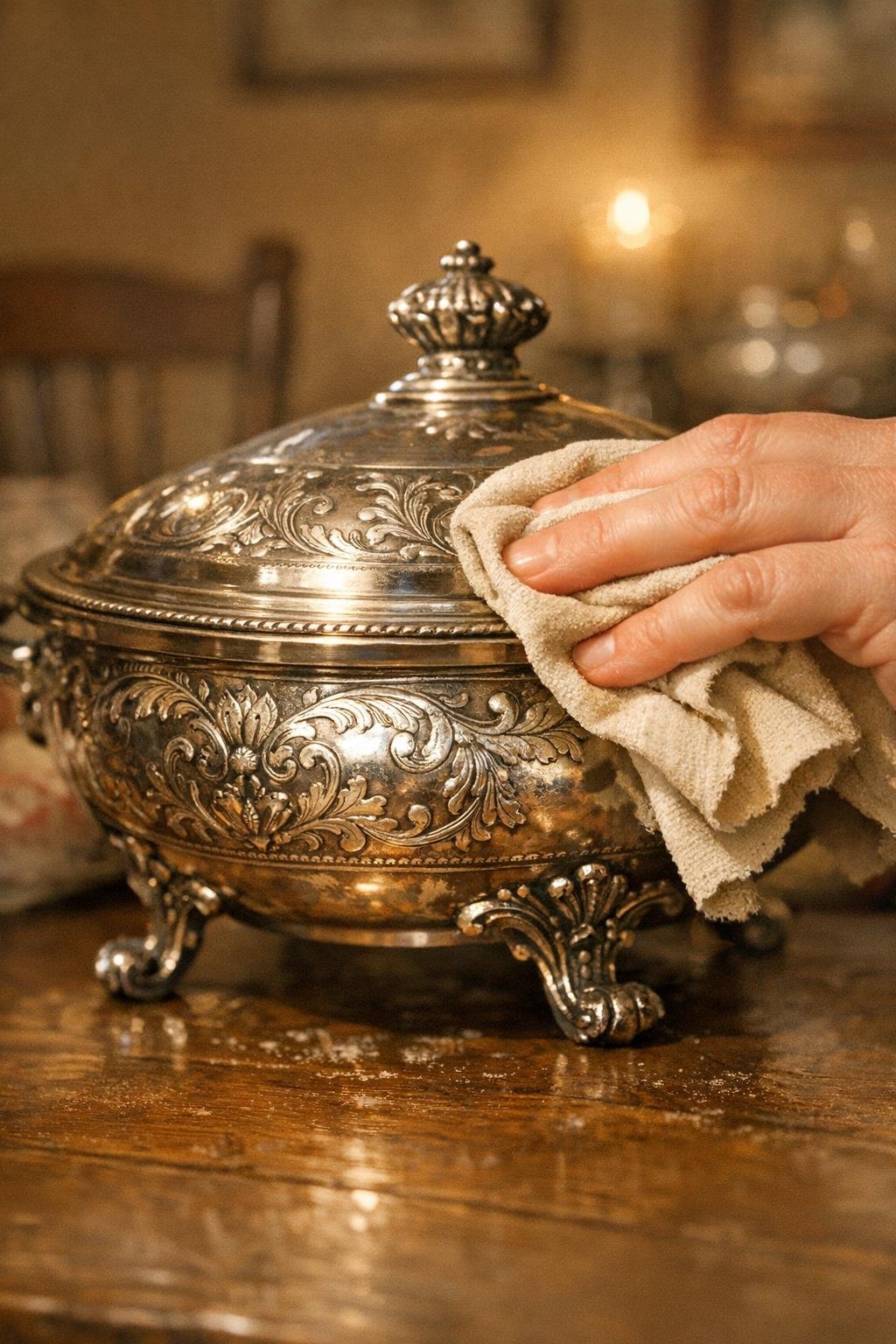
If I’m dealing with a treasured heirloom tray, ornate baby spoon, or a formal serving piece with lots of engraved detail, I sometimes use a cream silver polish after the soak or in place of it. Polish gives a more refined finish when appearance really matters and you have time to slow down.
But for everyday entertaining, holiday place settings, and those “people are coming in two hours” moments, the foil-and-baking-soda trick wins every time in my kitchen. It’s faster, cheaper, and far less tiring on my hands.
15. My favorite way to fit this into dinner-prep day
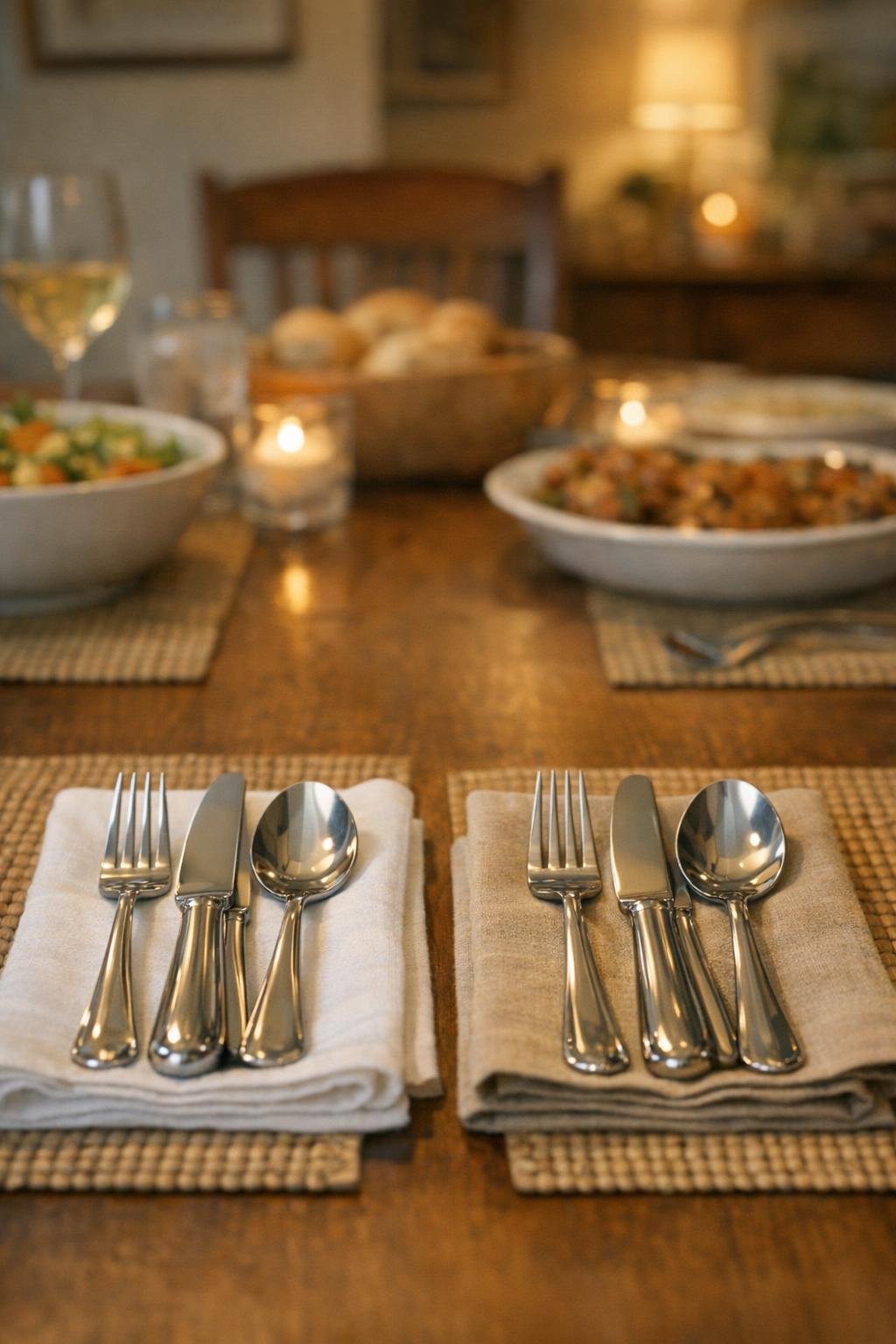
I usually do this job while something is baking for 20 to 30 minutes. I line the dish, start the soak, wipe down the table, come back to rinse and dry, and then set the silverware straight onto the placemats or napkins. It feels like one of those rare hosting tasks with a big visual payoff for very little effort.
If you’re feeding a family with picky eaters and a lot going on, shortcuts that still feel special are gold. Bright silverware, even if it’s only for a Sunday roast or a birthday casserole, makes the meal feel a little more intentional.
My uncle’s trick has become one of those small homemaking habits I return to again and again because it helps me get a lovely table on busy days without adding stress.
ADVERTISEMENT
