10. A lemon version if you hate the smell of vinegar
If vinegar is not your favorite, you can do a gentler version with lemon. Add 1 cup of water and 3 or 4 lemon slices to a microwave-safe bowl, or use 2 tablespoons of bottled lemon juice. Microwave for 3 to 4 minutes, then leave the door closed for 5 minutes.
This method freshens the microwave nicely and works well for moderate grease and food odors. In my experience, vinegar is better for heavy burnt-on splatter, but lemon is perfectly good for maintenance cleaning once the worst buildup is gone.
11. What not to use inside a microwave
I avoid bleach, harsh oven cleaner, and steel wool inside the microwave. Bleach can leave a strong residue and unpleasant fumes. Oven cleaner is often too aggressive for microwave interiors, especially if there are painted or coated surfaces. Steel wool and abrasive scrubbers can scratch the interior and make future grime stick even more easily.
I also do not spray cleaner directly into the vent openings or control panel area. If I need cleaner there, I spray it onto the cloth first. Less liquid near electrical components is always the safer route.
12. How often to do this so grease never builds up again
For a busy household that uses the microwave several times a day, I think a quick steam clean once a week is ideal. If you mostly use it for tea, oatmeal, or reheating the odd plate of leftovers, every 2 weeks may be enough. The key is not letting splatter bake on for a month.
I also do a 20-second wipe the moment I notice a fresh spill. That tiny habit saves a lot of effort later. Fresh messes come off in one swipe; old ones demand steam.
13. The best prevention tip is ridiculously simple
My number-one prevention habit is using a microwave cover. A basic plastic microwave plate cover costs around $5 to $12, and it blocks most splatter before it ever hits the walls. Even a microwave-safe plate set loosely over a bowl works in a pinch.
Foods most likely to explode or splatter are tomato sauces, soups, oatmeal, beans, leftover rice, and anything oily. Covering those dishes cuts cleanup dramatically. I also reheat in shorter bursts, usually 60 to 90 seconds at a time, stirring between rounds so food heats more evenly and splatters less.
14. When this trick works best, and when it doesn’t
This steam method works beautifully on grease film, sauce splatter, reheated food residue, and light odors. It is especially effective if the mess is on the side walls, ceiling, and door where steam can gather and soften buildup evenly.
Where it struggles a bit is with truly carbonized spots that have been there for months, or sticky sugar syrups that have hardened into a glaze. Even then, steam still helps a lot, but you may need a second round or a targeted baking soda paste afterward.
15. My quick routine from start to finish
When I do this now, I keep it very simple: 1 cup water, 2 to 3 tablespoons vinegar, microwave 4 minutes, rest 5 minutes, wipe top to bottom, wash the turntable, dry everything, and put it back together. From start to finish, including waiting time, it takes about 12 to 15 minutes, but hands-on work is only about 3 minutes.
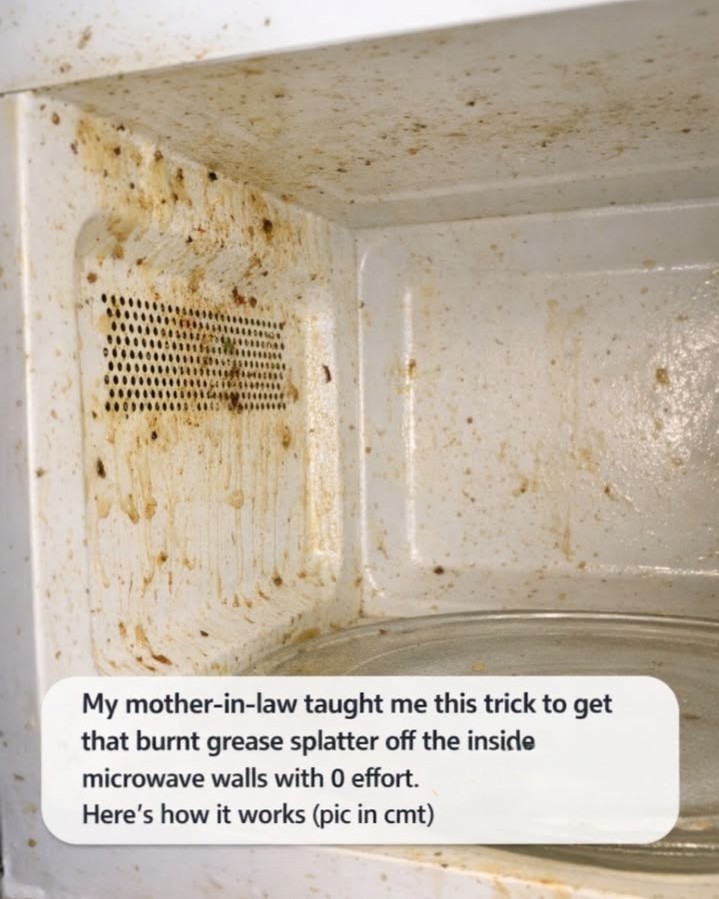
That is why I still think my mother-in-law was right to call it the lazy way to clean a microwave. It feels like no effort because the steam does the hard part for you. Once you try it and watch those burnt grease specks slide off with a cloth, it is very hard to go back to scrubbing.
