1 liter whole milk (at least 3.5% fat),
200 g sugar.
Preparation
First, I pour the milk into the largest possible saucepan with a thick bottom. A sufficiently large pan is important because the milk can easily rise when heated. Then I sprinkle in the sugar and immediately begin stirring gently.
Now, gently heat the milk. The heat should never be too high. Patience is the most important ingredient in this recipe. The more gently the milk simmers, the more beautifully its creamy consistency will develop later. As the sugar slowly melts, it will combine completely with the milk.
Once the sugar has completely dissolved, I let the mixture simmer gently over low heat, stirring regularly to prevent sticking. Gradually, the liquid begins to thicken. It is precisely at this point that the typical flavor of homemade condensed milk develops.
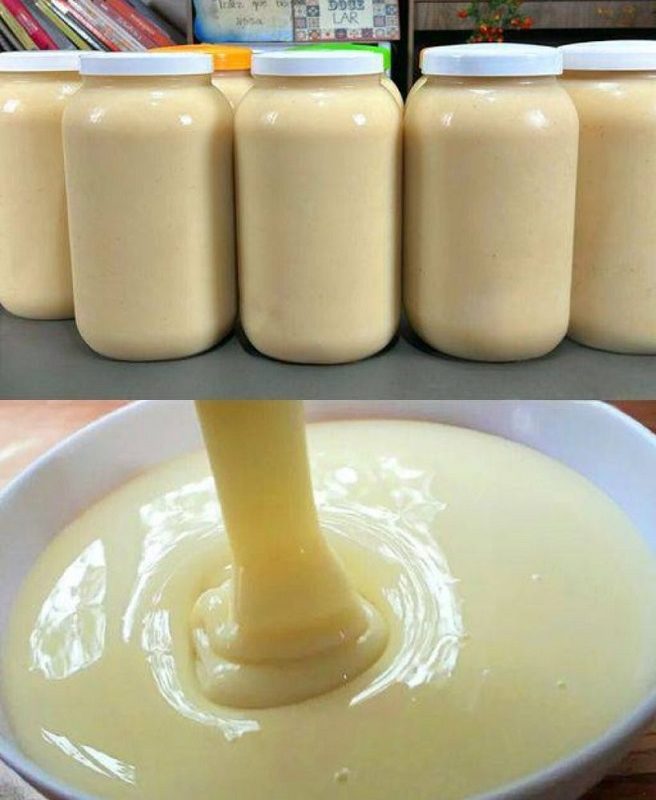
During the cooking process, not only the consistency but also the color changes. The milk gradually takes on a light cream color and develops a pleasantly velvety texture. Anyone making condensed milk for the first time will be surprised by how much the aroma changes during cooking. The whole kitchen smells wonderfully of warm milk and light caramel.
After about thirty to forty-five minutes, the liquid will have reduced significantly. The longer it simmers, the thicker it will become. However, keep in mind that the condensed milk will thicken further as it cools. Therefore, I usually remove it from the heat when it still appears somewhat liquid.
Now let the finished condensed milk rest in the pot for a few minutes. Then carefully pour it into a clean, hot-rinsed glass jar. As it slowly cools, it develops its final consistency.
Once completely cooled, the jar goes into the refrigerator. The condensed milk will keep there for several days without any problems. Before each use, I give it a quick stir to make it extra creamy again.
I use it in incredibly versatile ways. I especially love adding a few spoonfuls to freshly brewed coffee. This creates a wonderfully mild flavor reminiscent of cozy cafés. It also tastes fantastic over fresh strawberries or with vanilla ice cream.
It’s also a real asset when baking. It’s suitable for cheesecakes, creams, cake fillings, or various desserts. Especially when unexpected guests arrive, you can quickly conjure up something delicious with just a few ingredients.
If you like, you can easily modify the basic recipe. A small vanilla bean or a little vanilla extract adds a particularly delicate aroma. A touch of cinnamon also goes wonderfully with the colder months. Some people also add a pinch of salt, which makes the flavor even more rounded.
Another advantage is that the sweetness can be adjusted to suit individual preferences. Those who prefer it less sweet can simply reduce the sugar. For particularly creamy desserts, on the other hand, I sometimes use a little more sugar, which makes the consistency even smoother.
What I find particularly appealing about this recipe is that it demonstrates how uncomplicated many classic dishes actually are. We often automatically reach for ready-made products, even though many of them can be made from scratch with just a few ingredients. It’s precisely these kinds of simple recipes that constantly remind me that good food doesn’t have to be complicated.
That’s why there’s almost always a small jar of homemade condensed milk in my refrigerator these days. Whenever I use it, I think back to my grandmother, who said that the simplest recipes are often the best. Back then, I only half understood what she meant. Today, I know exactly what she meant. With a little time, two simple ingredients, and a bit of patience, you can make creamy condensed milk that tastes wonderful, is incredibly versatile, and requires absolutely no unnecessary additives. That’s precisely why this recipe has become one of my favorite kitchen classics and will certainly remain a staple in my recipe collection for many years to come.
