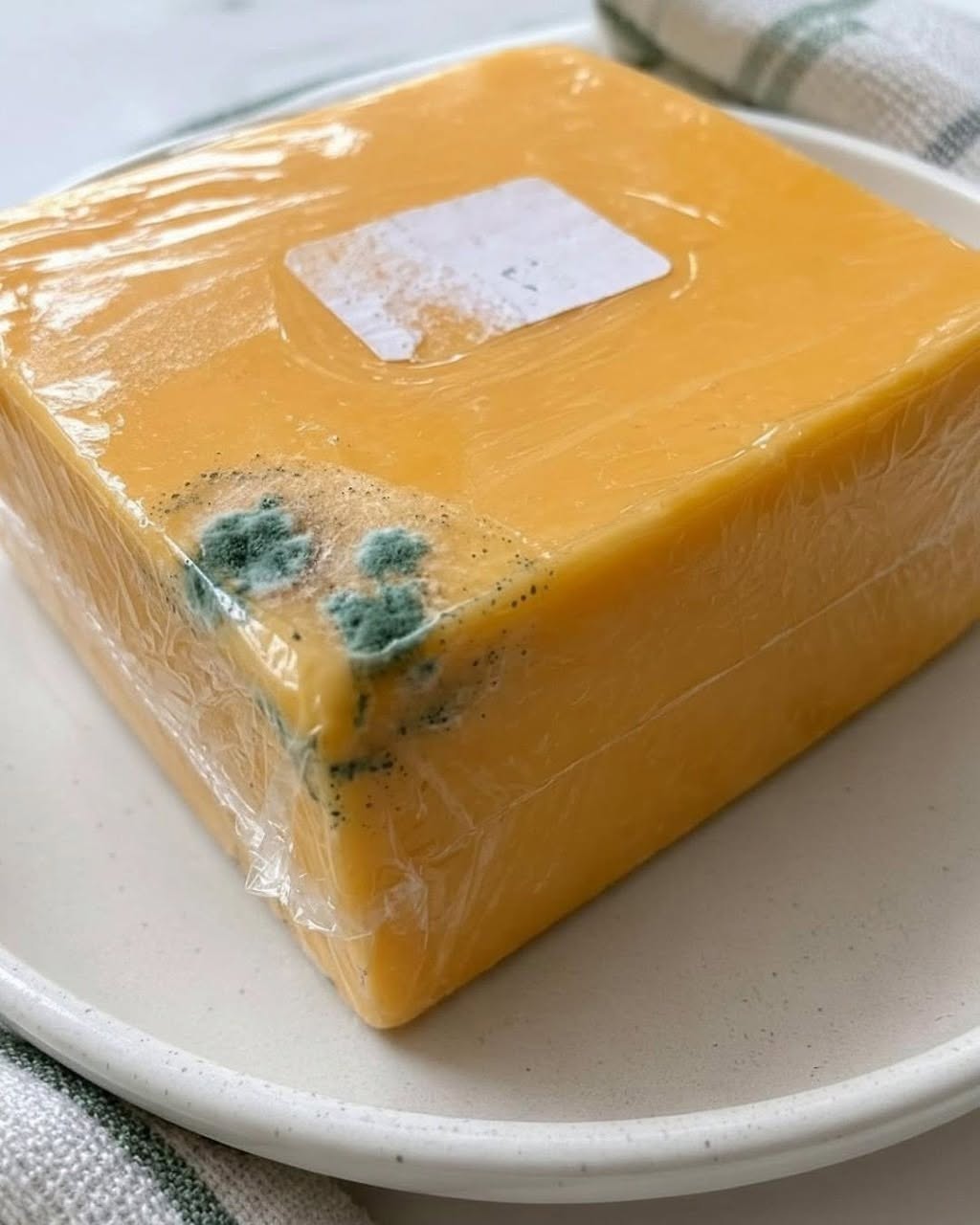
How to Cut It Off (Without Making It Worse)
This is where people mess up—cutting too close.
Here’s the right way:
-
Use a clean, sharp knife.
-
Cut at least 1 inch (2.5 cm) around and below the mold.
-
Don’t slice straight through the mold—that drags spores into the good part.
-
Cut wide, then discard the moldy portion immediately.
It might feel like you’re sacrificing more cheese than necessary. You are. That’s the point.
Better safe than sorry.
When to Toss the Whole Block (Even If It Hurts)
There are moments where trimming just isn’t the move.
Throw it all away if:
-
Mold appears in multiple spots
-
It looks like it’s spread deeper than the surface
-
The texture feels off—soft, wet, or sticky
-
The smell makes you hesitate, even slightly
And here’s the honest truth: if you’re unsure… you’re already uncomfortable. That alone is reason enough to let it go.
Food should feel safe, not questionable.
What the Experts Actually Say
According to the USDA, hard cheeses like cheddar can be saved by cutting away mold with a 1-inch margin.
Soft cheeses? Toss them completely.
It’s a simple rule, and honestly—it holds up in real life.
Can You Still Cook With It After Trimming?
Short answer: Yes.
Once you’ve removed the mold properly, cheddar is still great for cooked dishes like:
-
Grilled cheese
-
Pasta sauces
-
Casseroles
Heat helps reduce any remaining risk, and melted cheddar tends to hide minor imperfections anyway.
Still, give it a quick taste first. If something feels off, don’t force it.
