ADVERTISEMENT
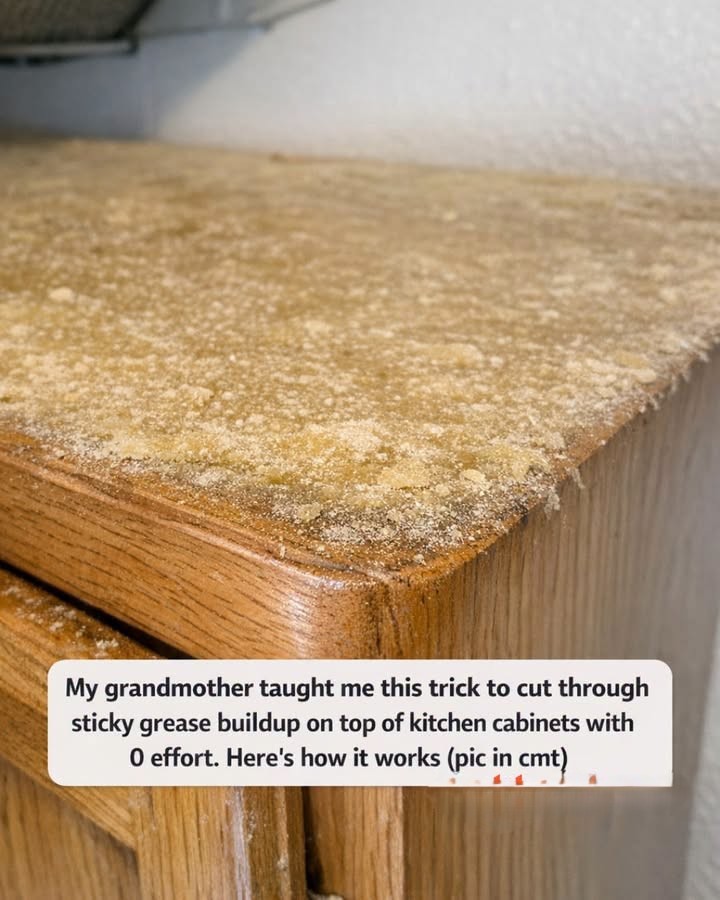
My grandmother taught me this trick to cut through sticky grease buildup on top of kitchen cabinets with 0 effort. Here’s how it works
6. How to apply the trick so the grease lifts instead of smears
First, remove any decorative items from the cabinet tops. Then dry-dust the surface lightly with a paper towel or dry cloth to pick up loose dust bunnies. Don’t press hard at this stage, or you can grind dust into the grease.
Next, dip a cloth or sponge into the warm cleaning solution and wring it out well. You want it damp, not dripping. Wipe the cabinet top so the surface is evenly moistened. For stubborn areas, lay damp paper towels directly over the sticky patches and let them sit for 5 to 10 minutes.
After the wait, wipe from back to front in long passes. I usually fold my microfiber cloth into quarters so I can switch to a clean side as soon as one gets dirty. That one small habit saves a lot of frustration.
7. What to do if the buildup is really thick
Some cabinet tops have a layer so thick you can actually see the outline where grease has trapped years of dust. In that case, the first wipe may only loosen the top layer. Don’t be discouraged. Reapply the solution and let it sit another 5 minutes.
Then use a plastic spatula held at a low angle, around 20 to 30 degrees, to gently lift the softened grime. Never use a metal putty knife or anything sharp enough to gouge the finish. Once the bulk is removed, go back with your damp microfiber cloth and wipe clean.
I’ve cleaned cabinet tops this way in older apartments where the residue was nearly 1/8 inch thick near the stove. It still came off with patience, warm solution, and a plastic scraper.
8. When baking soda helps and when it doesn’t
Baking soda can be useful, but I treat it as a backup, not the first step. If a small patch remains sticky after two rounds of the warm soap solution, make a loose paste with 1 tablespoon baking soda and just enough water to dampen it. Apply it to the spot, wait 2 to 3 minutes, then wipe gently with a soft cloth.
I avoid aggressive scrubbing with baking soda on glossy painted cabinets or delicate finishes because it can act as a mild abrasive. It’s excellent on tougher laminate surfaces, but on wood cabinets, less is more.
9. The biggest mistake people make: too much water
One thing I’ve learned over the years is that people often think harder cleaning means more liquid. On cabinet tops, that can backfire. If water runs over the cabinet edge or seeps into seams, it can swell wood, loosen trim, or leave drips down the door fronts.
That’s why I always wring cloths thoroughly and work in sections about 18 to 24 inches wide. Clean one section, wipe it dry, then move on. It’s a little more methodical, but it protects the finish and gives better results.
ADVERTISEMENT
