Glass baking dishes are a staple in many kitchens, prized for their versatility and ability to handle high temperatures. However, over time, you may notice a cloudy white haze developing on the surface of your beloved glassware. This stubborn residue can be frustrating, especially when it seems impervious to traditional cleaning methods.
Understanding the nature of this haze is crucial for maintaining your glass bakeware in pristine condition. In this article, we’ll explore the possible causes of this haze, whether it’s a safety concern, and how to address and prevent it effectively.
1. What That Cloudy White Haze on Glass Bakeware Really Is
The cloudy white haze on glass bakeware is often the result of mineral deposits left behind by hard water. Hard water contains high levels of calcium and magnesium, which can leave a filmy residue on glass surfaces after evaporation. This haze is particularly common in areas with hard water, where minerals are present in concentrations above 60 milligrams per liter.
Another potential cause of the haze is etching, a process where the glass surface becomes slightly roughened due to prolonged exposure to these minerals or harsh detergents. Unlike simple mineral deposits, etching alters the surface of the glass, making it more difficult to remove.
2. How Hard Water and Minerals Etch the Surface of Glass
Hard water is water that has a high mineral content, primarily calcium and magnesium ions. When hard water is used for washing, these minerals can adhere to glass surfaces, especially when the water evaporates. Over time, repeated exposure leads to a buildup of these minerals, creating a cloudy appearance.
Additionally, the process of etching occurs when these minerals interact with the silica in glass, resulting in a microscopically rough surface. This etching is often exacerbated by the use of harsh or abrasive cleaning agents, which can accelerate the wear on the glass surface.
3. Is It Dangerous? Safety Concerns About Etched Glass Dishes
The primary concern with etched glass is not safety but aesthetics and functionality. The etching process doesn’t make the glass inherently dangerous to use, but it can affect the structural integrity over time, especially if the etching is severe.
Etched glass may also become more prone to breaking or cracking under thermal stress, as the roughened surface can create points of weakness. While using etched glass bakeware isn’t immediately hazardous, it’s important to monitor for signs of further damage.
4. How to Tell Mineral Etching From Soap Scum or Grease
Distinguishing between mineral etching and other types of residues like soap scum or grease is crucial for determining the right cleaning approach. Mineral etching often appears as a uniform, whitish haze that doesn’t easily wipe off and feels slightly rough to the touch.
Soap scum or grease, on the other hand, tends to be more localized and can usually be removed with a thorough washing using detergent and hot water. A simple test is to apply a small amount of vinegar to the affected area; if the haze disappears temporarily, it’s likely due to mineral deposits rather than etching.
5. Cleaning Methods That Won’t Fix Etched Glass (And Why)
Many traditional cleaning methods, such as using abrasive pads or harsh chemical cleaners, won’t fix etched glass and can sometimes make the problem worse. Abrasive materials can further scratch the surface, exacerbating the etching.
Chemical cleaners that are too harsh can react with the glass surface, deepening the etching or even discoloring the glass. It’s essential to use gentle cleaning agents and non-abrasive tools to avoid additional damage.
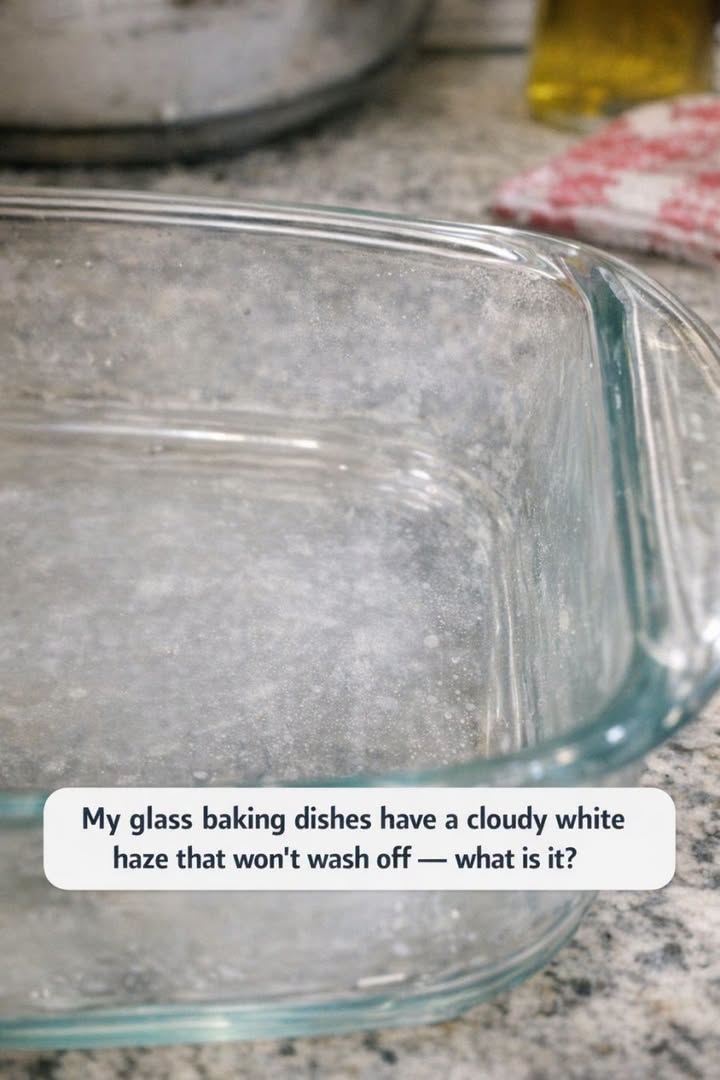
My glass baking dishes have a cloudy white haze that won’t wash off — what is it?
ADVERTISEMENT
ADVERTISEMENT
