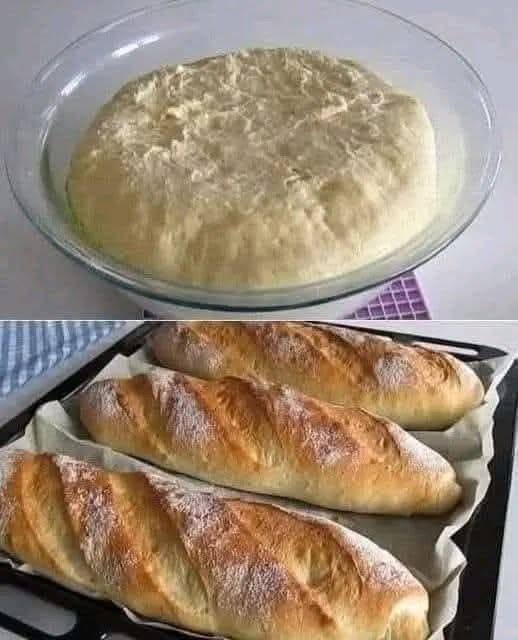
Creating steam in your oven is perhaps the most critical factor for a truly crispy crust. As detailed in the instructions, pouring hot water into a preheated pan on the bottom rack during the first few minutes of baking helps create a steamy environment that keeps the crust soft, allowing the bread to fully expand before it hardens. You can also spray the oven walls with water a few times during the initial baking. Another important tip is to use a very sharp blade for scoring your baguettes. A proper “lame” (a razor blade on a stick) or a very sharp utility knife will give you clean, deep cuts, which are vital for controlled oven spring and the beautiful ear on your baguettes.
For variations, you can easily adapt this basic baguette recipe. For a more rustic, whole-grain baguette, substitute up to 25% of the all-purpose flour with whole wheat flour, keeping in mind that you might need a tiny bit more water as whole wheat absorbs more liquid. For a flavorful twist, try incorporating herbs like dried rosemary or thyme into the dough during the mixing stage. About 1-2 tablespoons per batch would add a lovely aromatic touch. You could also add a tablespoon of finely grated Parmesan cheese for a cheesy baguette, perfect for serving with pasta or soup. For a slightly sweeter, richer dough, a teaspoon of honey or malt syrup can be added to the water, which also aids in browning. Remember that these variations might slightly alter the texture and rise time, so keep an eye on your dough.Recipe subscription box
Discover more
Homemade bread recipes
Dessert recipes cookbook
salads
Finally, don’t over-proof your dough. While it’s important for the baguettes to be visibly puffed before baking, over-proofed dough can collapse in the oven and result in a dense crumb. A gentle poke test should show the dough slowly springing back. Conversely, under-proofed dough won’t expand properly and will result in a tight, heavy crumb. Practice makes perfect when it comes to judging proofing times, so don’t be discouraged if your first batch isn’t absolutely perfect. Each bake is a learning experience, and the joy of homemade bread is in the journey as much as the delicious destination.
Storage and Reheating
Homemade baguettes are best enjoyed on the day they are baked, ideally within a few hours of cooling, when their crust is at its crispiest and the interior is perfectly soft. However, if you have leftovers, proper storage can help extend their freshness for a short period.
To store, allow the baguettes to cool completely on a wire rack. Once cool, the best way to keep the crust relatively crisp is to store them in a paper bag at room temperature. This allows some air circulation, preventing the crust from becoming soggy. Avoid storing them in airtight plastic bags or containers, as this traps moisture and will quickly turn the crust soft and chewy. Stored in a paper bag, your baguettes will stay good for about 1-2 days, though the crust will soften over time.Cooking & Recipes
Discover more
Butter cookie recipe
Sponge cake mix
Food blog subscription
For longer storage, baguettes can be frozen. Once completely cooled, wrap each baguette tightly in plastic wrap, then an additional layer of aluminum foil. Place them in a freezer-safe bag. They can be stored in the freezer for up to 1-2 months. When you’re ready to enjoy them, remove the frozen baguette from the freezer, unwrap it, and allow it to thaw at room temperature for an hour or two. To restore its crispy crust and warm interior, preheat your oven to 375°F (190°C). Lightly spray the thawed baguette with water (or quickly run it under the tap) and bake directly on the oven rack for 8-12 minutes, or until the crust is crisp and the interior is heated through. This reheating method works wonderfully to bring a frozen baguette back to life, almost like it was freshly baked.
You can also refresh a day-old baguette that has gone a bit soft. Simply preheat your oven to 350°F (175°C), lightly spray the baguette with water, and bake for 5-7 minutes. This will revive the crust and warm the interior, making it much more enjoyable than eating it cold and stale.
Frequently Asked Questions
What is the difference between all-purpose flour and bread flour for baguettes?
Bread flour has a higher protein content (typically 12-14%) compared to all-purpose flour (10-12%). The higher protein in bread flour forms more gluten, which gives baguettes a chewier texture and a more open, airy crumb with larger holes, often desired in artisan breads. All-purpose flour will still produce a delicious baguette, but it might have a slightly less chewy texture and a tighter crumb.Ranges, Cooktops & Ovens
Why is steam important when baking baguettes?
Steam plays a crucial role in developing the signature crispy, thin crust of a baguette. During the initial phase of baking, the steam keeps the surface of the dough moist and pliable, allowing the bread to expand fully (oven spring) before the crust sets. Without steam, the crust would harden too quickly, restricting expansion and resulting in a denser loaf with a thicker, chewier crust.
My baguettes are dense and don’t have many holes. What went wrong?
Several factors can lead to dense baguettes. It could be due to under-kneading, which means the gluten wasn’t sufficiently developed to trap gases. It might also be under-proofing, where the dough didn’t have enough time to rise and create sufficient air pockets. Overworking the dough during shaping can also degas it too much, leading to a denser crumb. Ensure your yeast is active and your water temperature is correct for optimal yeast activity.
How can I get those beautiful slashes (scoring) on top of my baguettes?
To get clean, professional-looking slashes, you need a very sharp blade. A baker’s lame (a razor blade on a handle) is ideal, but a very sharp utility knife or even a clean, sharp single-edge razor blade can work. Make quick, confident, diagonal cuts about 1/2 inch deep along the length of the baguette. The key is to make these cuts just before the baguettes go into the oven, as they facilitate oven spring and create the characteristic “ear” on the crust.
