Slow cookers are one of the easiest kitchen appliances to use. Add your ingredients, choose a cooking setting, put on the lid, and let gentle heat do most of the work.
ADVERTISEMENT
They are especially useful for soups, stews, shredded meats, chili, and other dishes that benefit from several hours of slow cooking.
But the fact that a slow cooker can cook something for six or eight hours does not mean every ingredient should spend that much time in it.
Some foods become unpleasantly soft, some separate or lose their flavor, and a few can create genuine food-safety concerns if handled incorrectly.
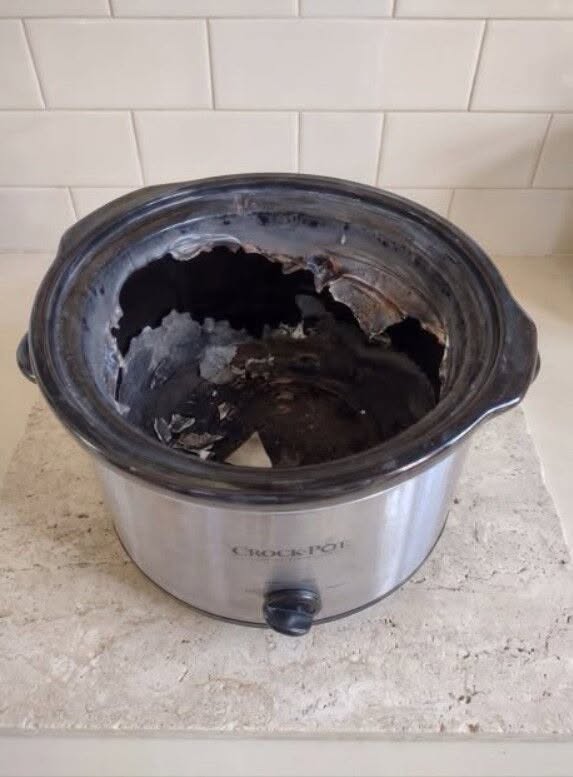
The photo of a badly damaged slow-cooker insert is also a good reminder that the appliance itself deserves attention. A cooker with cracked, chipped, badly damaged, or deteriorating surfaces should not simply be ignored. Check the manufacturer’s instructions and replace damaged cookware when necessary.
ADVERTISEMENT
Here are 11 foods and ingredients that deserve special consideration before you put them into your slow cooker.
1. Frozen Meat and Poultry
One of the biggest mistakes is putting frozen meat or poultry directly into a slow cooker.
A slow cooker heats gradually. Frozen chicken, beef, pork, or turkey can therefore spend too much time warming through the temperature range in which bacteria multiply rapidly. The USDA recommends thawing meat and poultry before placing them in a slow cooker.
The safest approach is simple: move frozen meat to the refrigerator ahead of time and allow it to thaw completely. If you use cold water or a microwave to thaw it, cook it immediately afterward.
Once thawed, however, many tougher cuts of meat are excellent candidates for slow cooking.
2. Delicate Fish and Seafood
Fish, shrimp, scallops, and other delicate seafood generally don’t need hours of cooking.
Because seafood cooks relatively quickly, leaving it in a slow cooker for the entire cooking period can produce a rubbery, dry, or mushy texture. Shrimp, for example, can become particularly tough when overcooked.
If you’re making a seafood chowder, stew, or similar dish, prepare the base first and add the seafood toward the end. This allows it to cook gently without spending several hours exposed to heat.
For many seafood dishes, the stovetop, oven, grill, or skillet is simply a better choice.
3. Pasta
Pasta and slow cookers can be a troublesome combination.
Dry pasta absorbs liquid as it cooks, and several hours of exposure to moisture and heat can leave it swollen, sticky, and mushy. Instead of distinct noodles or shapes, you may end up with a starchy mass.
A better method is to prepare the sauce, meat, and vegetables in the slow cooker and cook the pasta separately. Add the cooked pasta shortly before serving.
If a particular slow-cooker recipe specifically calls for pasta, follow its timing carefully rather than assuming the noodles can remain in the cooker for the entire cooking period.
4. White Rice
Rice has a similar problem.
White rice can absorb a considerable amount of liquid and release starch during prolonged cooking. The result may be overly soft, sticky, or unevenly cooked rice.
For most meals, cooking rice separately gives you much better control over its texture. Prepare your slow-cooked main dish, make the rice on the stovetop or in a rice cooker, and combine them when you’re ready to eat.
Some varieties, such as wild rice, can withstand slow cooking better than ordinary white rice, but the recipe still needs to account for the appropriate amount of liquid and cooking time.
5. Milk and Other Delicate Dairy Products
Milk, cream, sour cream, yogurt, and some soft cheeses can behave poorly when exposed to prolonged heat.
Instead of producing a smooth, creamy sauce, dairy can separate, curdle, or develop an unpleasant grainy texture. This is especially noticeable when dairy is added at the beginning of a long cooking cycle.
That doesn’t mean you have to avoid creamy slow-cooker recipes altogether. In many cases, the solution is simply to add the dairy near the end.
Stir in cream, sour cream, yogurt, or cheese during the final stage of cooking, following the recipe’s instructions. This preserves a much smoother texture.
6. Fresh Herbs
Fresh herbs are wonderful for finishing a dish, but many delicate herbs don’t benefit from spending several hours in a slow cooker.
Basil, cilantro, parsley, dill, and similar herbs can lose their fresh aroma and vibrant flavor during prolonged cooking. Instead of tasting bright and fresh, they may become muted.
A useful trick is to use sturdier dried herbs during the long cooking process and reserve fresh herbs for the end.
Sprinkling chopped parsley, cilantro, basil, or green onions over the finished dish can provide a much fresher flavor and attractive appearance.
7. Delicate Vegetables
Not every vegetable is designed for an eight-hour cooking session.
Tender vegetables such as spinach, asparagus, zucchini, and some leafy greens can become limp and watery when cooked for too long. Their color and fresh flavor may also suffer.
Hardier vegetables such as carrots, potatoes, onions, and root vegetables generally work much better in slow-cooked dishes because they can tolerate prolonged exposure to heat.
If you’re using a delicate vegetable, consider adding it during the final portion of cooking instead of putting it in at the beginning.
8. Lean Cuts of Meat
A slow cooker is fantastic for transforming tough, collagen-rich cuts into tender meals. It isn’t necessarily the best tool for every expensive or very lean piece of meat.
Chicken breast, pork tenderloin, lean steaks, and similar cuts can become dry when cooked for too long. The gentle heat doesn’t automatically guarantee that lean meat will remain juicy.
For slow cooking, cuts containing more connective tissue and some fat are often better choices. Beef chuck, brisket, pork shoulder, and chicken thighs are classic examples.
If you have a beautiful steak or another expensive tender cut, you’re usually better off using a skillet, grill, or oven method designed for shorter cooking times.
9. Bacon and Other Foods That Need Crisping
A slow cooker excels at moist, gentle cooking. It is not designed to create the dry, intense heat needed for crisping.
Raw bacon placed directly into a slow cooker may release plenty of fat and develop flavor, but it won’t have the same crisp texture you get from a skillet or oven.
If your recipe needs crispy bacon, cook it separately first. Drain the excess fat and crumble or chop the bacon into the finished dish.
The same principle applies to ingredients that are supposed to have a crunchy exterior. Cook them separately and add them just before serving.
10. Raw Dried Beans Without Proper Preparation
Dried beans require special care.
Some raw or inadequately cooked beans, particularly red kidney beans, contain naturally occurring lectins that can cause illness when the beans aren’t properly prepared and cooked.
Don’t assume that simply putting dry beans into a slow cooker for several hours automatically makes them safe. Follow a tested recipe and the preparation instructions appropriate for the specific bean.
Canned beans are often a convenient alternative for slow-cooker recipes because they have already been cooked. If using dried beans, make sure you understand the preparation and cooking requirements before adding them.
11. Large Amounts of Alcohol
Wine, beer, and other alcoholic ingredients can be used in slow-cooked dishes, but pouring in a large amount and expecting the slow cooker to behave like an uncovered saucepan can lead to disappointing results.
Slow cookers are covered, so there is relatively little evaporation compared with uncovered cooking. A dish can therefore retain more of the alcohol and its strong flavor than you might expect.
If you’re using wine or another alcoholic ingredient, moderation is important. In some recipes, reducing the alcohol separately before adding it can produce a more balanced flavor.
Don’t use a slow cooker as a substitute for a proper reduction when the recipe depends on concentrating the flavor.
