
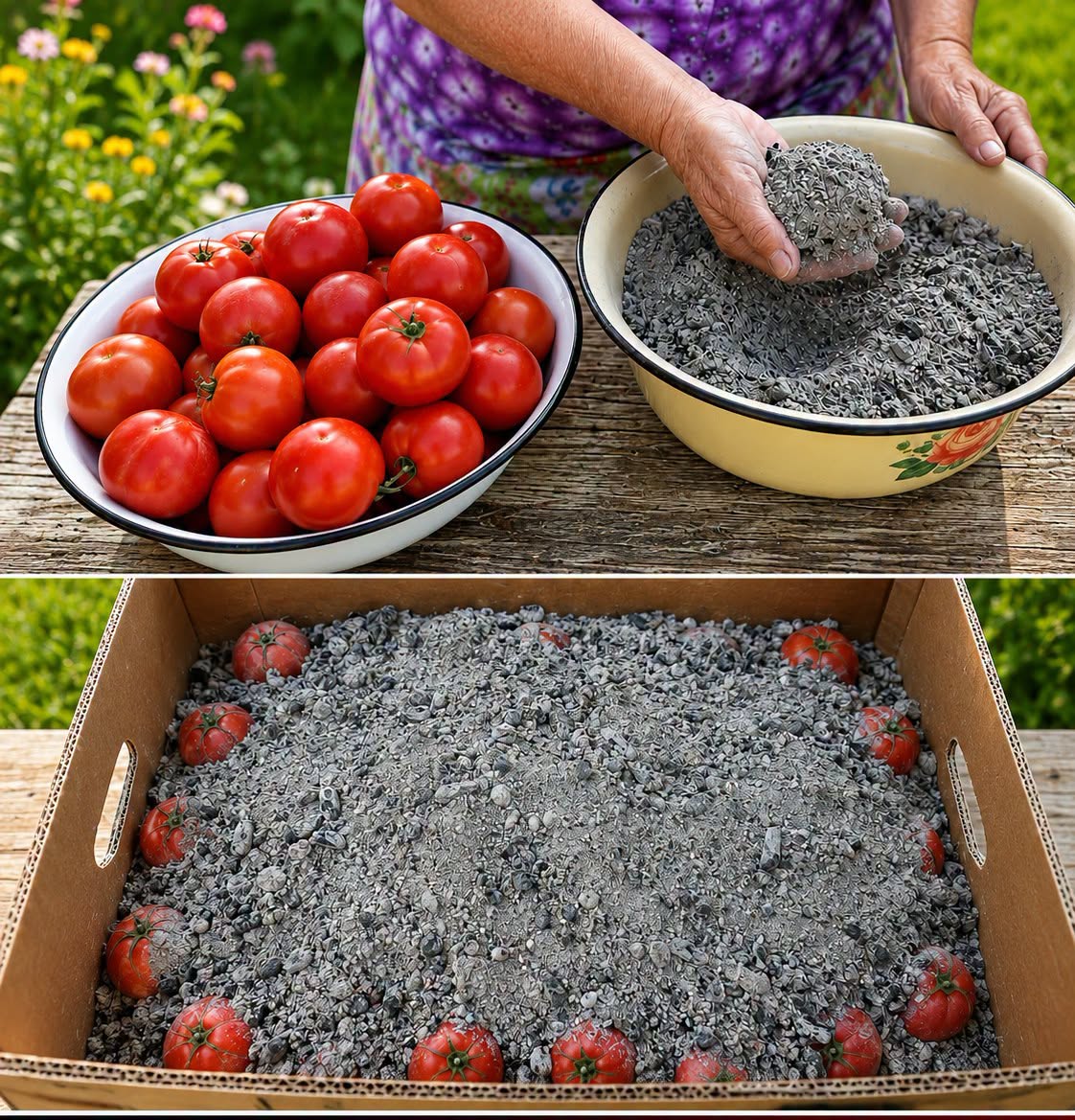
Tomatoes are a staple in many kitchens and are prized for their rich flavor and versatility. However, preserving fresh tomatoes for extended periods of time remains a challenge. Although refrigeration is common, it can alter the fruit’s flavor and texture. For those looking for a natural and effective method, preserving tomatoes in ash is an age-old technique that has been passed down through generations. This process extends the shelf life while preserving the tomatoes’ flavor and nutritional properties. Discover all the details about this traditional method and how you can recreate it at home.
Why use ash to preserve tomatoes?
Ash, especially that extracted from clean, untreated wood, has properties that make it an excellent preservative. Its alkaline nature creates an environment that is unfavorable for the growth of bacteria and mold that cause spoilage. In addition, the fine particles of ash form a barrier that reduces oxygen exposure and prevents moisture buildup, the main factors in the rapid deterioration of tomatoes. This simple method is ecological and economical and uses a natural byproduct of wood burning.
The necessary equipment
Before you begin, gather the following items:
Fresh and firm tomatoes – Choose ripe but not overripe tomatoes, without bruises or damage.
Clean wood ash – Only use ash from untreated wood that is completely dry and cool. Avoid ash from coal or treated wood, which may contain harmful substances.
A storage container – A wooden box, cardboard box, or a ceramic container are perfectly suitable.
Detailed instructions
Here’s how to preserve your tomatoes in ash:
Step 1: Prepare the ashes
Make sure the ash is completely dry and free of charcoal fragments. It should be as fine as possible to perfectly enclose and protect the tomatoes. If necessary, sift the ash to remove any lumps or impurities.
Step 2: Arrange the layers of ash and tomatoes
Place a thick layer of ash in the bottom of the container. This layer acts as insulation and absorbs moisture. Then carefully place the tomatoes on top of this layer, making sure they are not touching each other to avoid pressure that could cause marks.
Step 3: Cover completely with ash
Pour the ash over the tomatoes until they are completely covered, with no part exposed. Continue alternating layers of tomatoes and ash until the container is full or all of your tomatoes are used up. The last layer should be ash to seal the protective layer.
Step 4: Close and store
Seal the container tightly to protect it from light, moisture, and pests. Place it in a cool, dry, and dark place, such as a basement or pantry. These optimal conditions will help prolong the freshness of the tomatoes.
Durability and maintenance
This method can keep your tomatoes fresh for several months, depending on their initial ripeness and storage conditions. Remember to check the tomatoes regularly. If you notice moisture accumulating in the container or ash, carefully replace the ash to maintain a dry environment.
When you want to use your tomatoes, simply remove them from the ashes and rinse them in cold water. They are ready to be cooked or eaten raw, and their flavor and texture remain remarkably close to their original state.
The benefits of preserving in ash
This traditional method offers many advantages:
Natural and chemical-free : No preservatives or artificial processes, for natural preservation.
Environmentally friendly : It uses ash from a wood burning stove, which reduces waste.
Optimal preservation of flavors : Unlike refrigeration, ash preserves the authentic flavor and texture of tomatoes.
Economical : No special equipment needed, only common items.
Some important precautions
For successful conservation, pay attention to these important points:
Use only untreated wood ash : Ash from treated wood or charcoal may contain toxic substances.
Choose firm tomatoes : Unripe or damaged fruits are likely to rot despite storage.
Store cool and dry : Keep low temperature and no humidity to prevent deterioration.
Preserving tomatoes in ash is a simple but very effective method, a legacy of the cold era. By forming a protective layer around each fruit, the ash prevents rotting and allows you to enjoy fresh tomatoes for months. This economical and chemical-free technique fits perfectly into a sustainable strategy. If you want to use a natural preservation method, don’t hesitate to try this tip. With minimal equipment and a little patience, you will keep your tomatoes fresh and flavorful much longer than usual.
