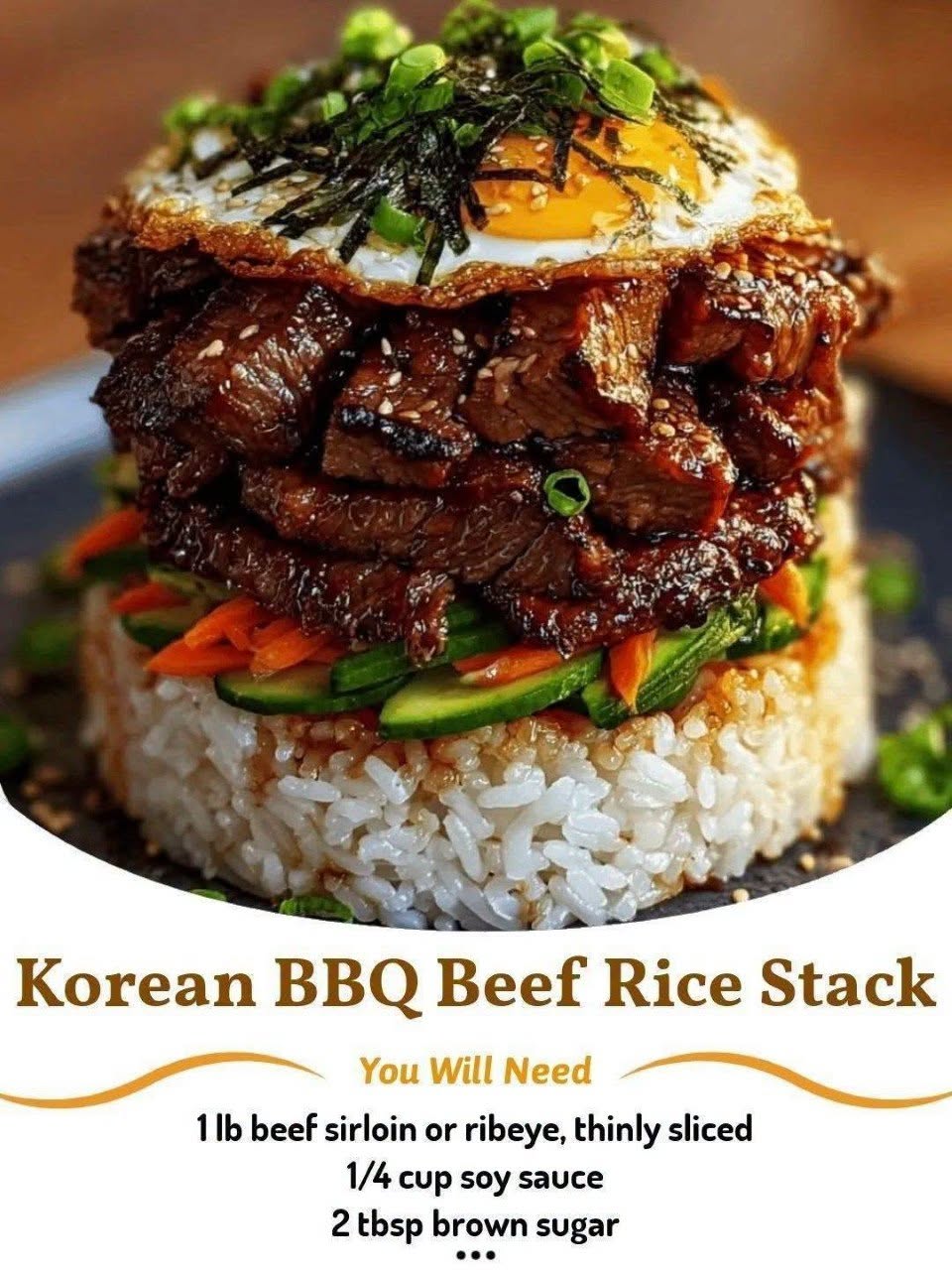
This is the dinner I make when I want something that feels like a restaurant bowl but comes together faster than delivery. Thin slices of beef soak up a sweet-savory marinade, then hit a screaming hot pan until the edges char. Pile it over jasmine rice with whatever vegetables look good, and you have a complete meal in about half an hour.
The trick is in the marinade. A grated Asian pear tenderizes the meat and adds a subtle sweetness you cannot get from sugar alone. Soy sauce, garlic, ginger, and sesame oil round it out into something that tastes like it cooked all day.
What builds the flavor
The marinade does almost all the work here, so use fresh aromatics and a ripe pear. For the beef, look for ribeye or sirloin with good marbling. The fat helps the meat caramelize instead of boil in its own juices. Jasmine rice adds a floral note that pairs better than plain white rice.
Raw ingredients for Korean BBQ beef with jasmine rice and vegetables
Raw ingredients for Korean BBQ beef with jasmine rice and vegetables
Thin-sliced ribeye or sirloin. The fat content keeps the meat tender and creates those crisp, caramelized edges.
Asian pear. Grated into the marinade, it naturally tenderizes the beef and adds a gentle sweetness.
Soy sauce. The salty backbone of the marinade. Use a brewed soy sauce, not the thin chemical kind.
Fresh ginger and garlic. They give the marinade its punch. Mince them finely so they distribute evenly.
Toasted sesame oil. Adds a nutty depth that defines Korean BBQ flavor. A little goes a long way.
Jasmine rice. Fragrant and slightly sticky, it catches every drop of sauce.
Fresh vegetables. Cucumber, carrot, and spinach add crunch and color without competing with the beef.
Gochujang. A fermented Korean chili paste that brings heat and umami to the sauce.
How to build the bowl
Freeze and slice the beef. Pop the steak in the freezer for 30 minutes to firm it up, then slice against the grain as thin as you can. Thinner slices mean faster cooking and better marinade penetration.
Make the marinade. Grate the pear on the fine side of a box grater and mix it with soy sauce, brown sugar, garlic, ginger, sesame oil, and gochujang. Toss the beef in the marinade and let it sit for at least 30 minutes, or up to 4 hours in the refrigerator.
Cook the jasmine rice. Rinse the rice until the water runs clear, then cook according to package directions. Fluff with a fork and keep it covered so it stays warm.
Sear the beef. Heat a large skillet or wok over high heat until it smokes slightly. Add a thin layer of oil and cook the beef in a single layer, leaving it undisturbed for 60 to 90 seconds to build a crust. Flip and cook 30 seconds more. Work in batches so the pan does not cool down.
Quick-cook the vegetables. In the same hot pan, flash-cook the spinach just until wilted, about 30 seconds. Keep the carrots and cucumber raw for crunch.
Assemble and garnish. Divide the rice among bowls, top with the seared beef, arrange the vegetables, and sprinkle with sliced scallions and toasted sesame seeds.
Korean BBQ Beef with Jasmine Rice and Fresh Veggies
Korean BBQ Beef with Jasmine Rice and Fresh Veggies
The cut and slice matter
Ribeye gives the richest flavor, but sirloin works well if you want a leaner bowl. The key is slicing against the grain. Look at the muscle fibers and cut perpendicular to them. This shortens the fibers so the meat feels tender instead of chewy. If you skip this step, even expensive steak turns tough.
Why pear belongs in marinade
Asian pear contains enzymes that break down proteins, which is why Korean cooks have used it for generations. It also adds moisture and a light fruity sweetness that balances the saltiness of the soy sauce. If you cannot find Asian pear, a Bosc pear works in a pinch, or add a tablespoon of kiwi puree. Do not leave it out entirely. The tenderness difference is real.
Vegetables that keep crunch
Raw carrot and cucumber add the crisp contrast that makes each bite interesting. I like to julienne them into thin matchsticks so they integrate into the bowl instead of sitting on top like a side salad. A quick toss with rice vinegar and a pinch of sugar pickles them slightly, which cuts through the richness of the beef. If you prefer cooked vegetables, quick-blanch the carrots for 60 seconds, but keep the cucumber raw.
Pan temperature is everything
If the beef hits a lukewarm pan, it steams in its own juices and turns gray. You want the pan ripping hot so the sugars in the marinade caramelize into a dark, sticky glaze.
Storage and reheating
Store the beef and rice separately in airtight containers in the refrigerator for up to 3 days. The raw vegetables are best cut fresh, but pickled carrots and cucumber will keep for a week. Reheat the beef in a hot skillet with a splash of water to revive the glaze. The microwave works in a pinch, but the texture suffers. For another beef and rice option later in the week, try our Korean BBQ Beef Rice Stack or the Quick Easy Korean Ground Beef for a faster twist.
Swaps and shortcuts
Ground beef works here if you are short on time. Brown it in a hot pan, drain the excess fat, then add the marinade and simmer until glossy. For the rice, brown rice or cauliflower rice both work. Make it gluten-free by swapping tamari for soy sauce. If you want extra heat, double the gochujang or add gochugaru flakes. The U.S. Department of Agriculture recommends cooking beef to a safe internal temperature, see the USDA beef safety guidelines. And if you love the rice side, our Savory Golden Onion Butter Jasmine Rice is worth bookmarking.
Korean BBQ Beef with Jasmine Rice and Fresh Veggies
Korean BBQ Beef with Jasmine Rice and Fresh Veggies
FAQs
What cut of beef is best for Korean BBQ?
Ribeye is the traditional choice for its marbling and rich flavor. Sirloin works well for a leaner option. The key is slicing it thin, about 1/8 inch, so it cooks in under 2 minutes.
Can I use ground beef instead of sliced steak?
Yes. Brown 1 lb of ground beef in a hot skillet, drain the fat, then pour in the marinade and simmer until the sauce reduces and clings to the meat. It cooks faster but still delivers the same bold flavor.
How long should I marinate the beef?
Thirty minutes is the minimum for flavor penetration. Two to four hours in the refrigerator gives the best results. Do not go beyond 8 hours, or the pear enzymes can make the meat mushy.
Is this recipe spicy?
It has a mild warmth from the gochujang. You can reduce it to 1 teaspoon for barely any heat, or increase it to 1 tablespoon for a noticeable kick. The sweetness of the pear keeps the heat in check.
What other vegetables can I use?
Shredded red cabbage, snap peas, bean sprouts, or sauteed mushrooms all work well. Keep at least one vegetable raw for textural contrast.
Can I meal prep this for the week?
Yes. Cook the beef and rice ahead, but store the raw vegetables separately and slice them fresh. Reheat the beef in a skillet rather than the microwave to preserve the glaze.
How do I store and reheat leftovers?
Keep leftovers in airtight containers in the refrigerator for up to 3 days. Reheat the beef in a hot pan with a tablespoon of water. The rice can be microwaved with a damp paper towel over it.
