


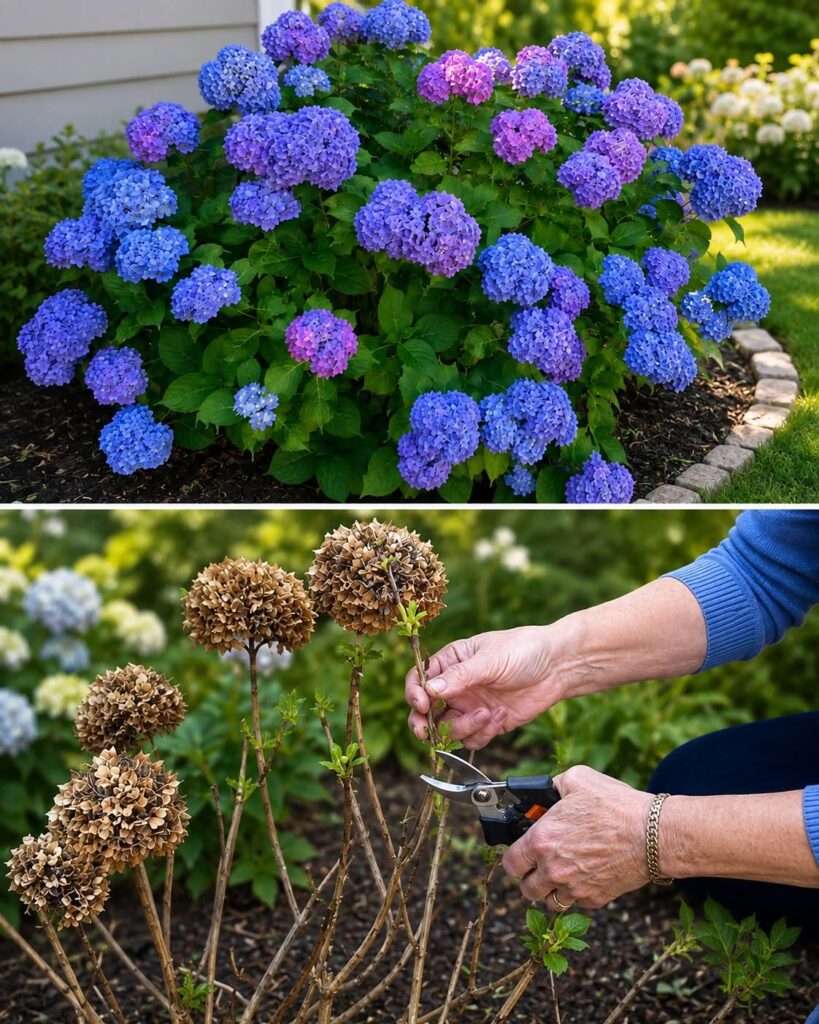


Pruning hydrangeas is essential for healthy growth and vibrant blooms. To do this successfully, it is crucial to understand the different hydrangea varieties and their bloom cycles. This knowledge will allow you to determine exactly when and how to prune these shrubs to maximize their beauty.
The different varieties of hydrangeas
Bigleaf hydrangeas (Hydrangea macrophylla): This category includes the ragweed and the spike hydrangeas. They bloom on the previous year’s wood, meaning the flower buds form in late summer or fall to open the following year.
Panicle Hydrangeas (Hydrangea paniculata): These hydrangeas bloom on new wood; their buds form in the spring just as the new season grows. Their bloom time usually extends from late summer to early fall.
Tree hydrangeas (Hydrangea arborescens): This variety, especially the very popular ‘Annabelle’, also blooms on new wood. The buds appear on spring growth and the flowers bloom in summer.
Oakleaf hydrangeas (Hydrangea quercifolia): These hydrangeas bloom on the previous year’s wood. Their cone-shaped inflorescences usually open in early to mid-summer.


When should hydrangeas be pruned?
For large-leaved hydrangeas: Since they bloom on old wood, they should be pruned immediately after flowering, in late summer. Pruning too late risks removing the buds that will produce the following year’s flowers.
For panicle hydrangeas: Pruning should be done in late winter or early spring, before new growth begins. Since they bloom on new wood, this pruning will not affect flowering.
For tree hydrangeas: As with hydrangeas, pruning is carried out in late winter or early spring without compromising their summer flowering, as they bloom on new wood.
For oakleaf hydrangeas: These hydrangeas, which bloom on old wood, are also pruned just after they have finished blooming.

How do you prune hydrangeas?
Remove dead or weak stems: Start by cutting back any dead, damaged, or fragile stems right down to the base. This step promotes air circulation in the shrub and stimulates vigorous growth.
Withered flowers: For varieties that bloom on old wood, prune just below the withered flowers. It is important not to prune too low, as the buds for the next bloom may be below the withered flowers.
Control shape and size: To control the volume and shape of your hydrangea, practice selective pruning by removing some branches to maintain the desired shape. Avoid over-pruning, especially for hydrangeas that bloom on old wood.
Tools and Technique: Use sharp, clean pruning shears to make precise cuts. Cut at a 45-degree angle, just above a healthy bud or at a junction with a branch.
Depending on the hydrangea variety and its flowering pattern, pruning methods and timing vary considerably. Knowing whether a hydrangea blooms on old or new wood will allow you to schedule pruning at the right time and use the right technique. Following these tips will ensure that your hydrangeas remain healthy and produce abundant blooms for years to come.